Ages 3 to 5: playing all together
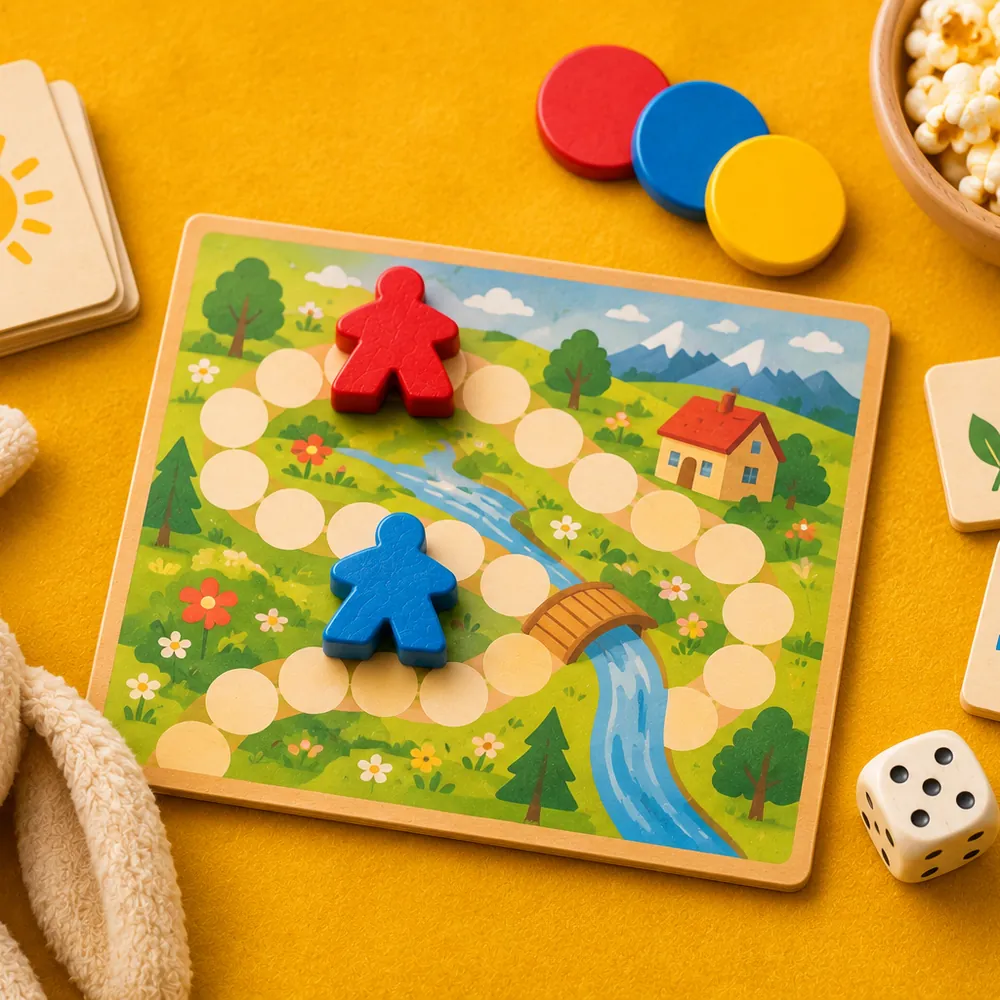
At this age, losing is hard. Co-operative games solve it: everyone plays against the game and wins or loses together. HABA's Orchard, a great classic, has you pick fruit before the raven reaches the orchard; its "First Orchard" version plays from two. Memory games with big illustrated cards are also very popular. Allow ten minutes per game, no more.
Affiliate link · Amazon
Ages 6 to 8: speed and observation
Around six, children love speed games where they can beat adults fair and square. Dobble is king: spot the symbol two cards share, faster than everyone else. Around seven or eight, Skyjo brings simple sums into a very easy card game, and Kingdomino has you build a kingdom in fifteen minutes, with a first taste of strategy. Jenga works at any age and teaches patience.
Affiliate link · Amazon
Ages 9 to 12: first big games
This is when children discover real board games, the ones you keep for years. Ticket to Ride has you link cities by rail: simple rules, hour-long games and real tension when an opponent blocks your route. Carcassonne has you lay tiles to build cities and roads. Splendor, a gem-collecting game, is perfect for a child who likes to count and plan. Co-operative games like Pandemic also go down well from about ten.
Affiliate link · Amazon
Learning to lose (a little)
End-of-game tantrums are part of learning. A few tricks help: alternate co-operative and competitive games, keep games short so the rematch comes quickly, praise a good move rather than the win, and show that you can lose with a smile. Avoid letting the child win every time: choose games where luck or speed gives them a real chance instead.
Siblings of different ages
When a five-year-old plays with a ten-year-old sibling, the youngest can team up with an adult. Co-operative games also smooth out age gaps. Dobble and Jenga work very well with mixed ages, because speed and dexterity don't depend on age alone.
What about family video games?
Video games played together on one screen can bring the family together too. Super Mario Bros. Wonder plays four on one screen, with older players helping younger ones. Mario Kart 8 Deluxe has assisted steering that keeps young children on the track. LEGO Star Wars plays two in split screen, perfect for a parent and a child. Always check the PEGI rating on the box.
Affiliate link · Amazon
Making games a ritual
Families who play most often have a fixed slot: Sunday afternoon, Friday night with a pizza, or a game after dinner on winter evenings. Leave a game out on the living-room table rather than in a cupboard: it will be played far more. And let the children choose the game now and then.
Mistakes to avoid
Buying a game for an older age "so it lasts", explaining every rule at once, playing too long or winning every game without giving them a chance: that's what puts children off games. An age-appropriate game, short rounds and an adult who's a good loser make players for life.
Your questions
From what age can children play board games?
From 2 or 3 with very simple, wooden co-operative games where everyone plays together against the game, like HABA's Orchard.
Which board game for a six-year-old and their parents?
Dobble is ideal: the child can win thanks to speed. Kingdomino or Skyjo become accessible around 7 or 8.
How do I help a child who hates losing?
Start with co-operative games, keep games short, praise good moves rather than winning, and show that losing isn't a big deal yourself.
Should I let children win?
Not every time: choose games where luck or speed gives them a real chance instead. A deserved win beats a gift.
Which first board game for an 8-to-10-year-old?
Ticket to Ride or Carcassonne: simple rules, games of an hour at most and enough choices to interest the adults.
How long should a game last with young children?
Ten to fifteen minutes under 6, twenty to thirty after. Three short games beat one long one.
Was this page useful?
Anonymous feedback: no cookie, no IP address, no account.